Environmental Communication & Culture Option
Coordinator:
Professor Mark Meisner
108A Marshall Hall
tel. 315.470.6908
e-mail: mmeisner@esf.edu
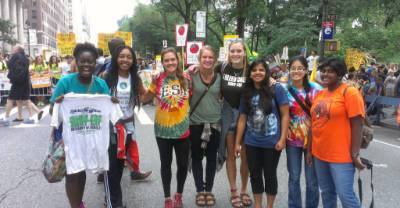
The Environmental Communication & Culture option focuses on the many ways that communication, broadly defined, intersects environmental affairs. These include activism, media, education, public participation, and conflict resolution. In addition, the option helps students explore the diversity of ways that environmental problems are understood, and ways that cultural meanings of Nature are expressed, including through literature and the arts.
No matter where your career path leads, the critical value of having a strategic, systems-based, and skilled understanding of communication dynamics and processes cannot be exaggerated. The Environmental Communication & Culture Option is based on the premise that it is through written, oral, and visual communication that humans determine their relationship with the rest of the planet and with each other concerning it. Therefore, the option is committed to equipping you with increased knowledge and skills to contribute to the effectiveness of all aspects of the environmental, civic, governmental, non-government organizations, and business communities.
We provide a broad-based foundation in environmental communication theory and application through core courses that all students in the option take. Yet we know you have individual interests and plans, so the option is flexible enough so you can choose option courses and option methods courses that make the most sense for you. Individual interests that students may pursue as part of this option include literature of Nature, environmental values and ethics, the meanings of Nature, advocacy, collaboration, leadership and group processes, dispute resolution, mass media and popular culture, information use, and environmental education/interpretation.
The Environmental Communication & Culture option is based on four key ideas.
- Communication Among Diverse Perspectives:
We seek to strengthen students’ ability to identify and appreciate their own and others' ideological and cultural perspectives as expressed in written, oral, and visual discourse. This increases students' abilities to better understand and participate in key ecological debates; work effectively with scientific, resource management, governmental and advocacy communities to address complex environmental issues; and build campaigns and educational programs, both domestically and internationally. - Theory Into Practice:
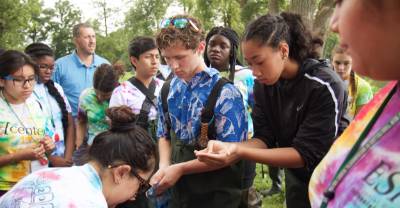
We place a primary emphasis on the application of theory so that students gain informed skills they can strategically use in diverse settings in non-government organizations, industry, government or wherever their professional lives take them. We highly value service learning, experiential learning, and field experiences as part of a student’s program. - Critical Thinking:
We encourage students to think critically about cultural patterns, economic and political lives, ethics, risk, science, the mass media, popular culture, literature, and other means by which we humans socially construct our beliefs, attitudes, policies, and behaviors. We encourage students to especially think critically about ecological degradation, power, and beauty. - Preparing for the Long Haul:
We recognize the value of the “whole person” and reflect this in our emphasis on spirit, imagination, celebration, connection to the natural world, emotional and artistic expression, building an affirming community, and sharing reflections on the personal challenges environmental professionals face. We want students to connect with the sources of their own deepest passions.
By choosing this option, you will develop the confidence, connections, skills, and insights to make significant long-term contributions.
Environmental Communication & Culture Option Requirements
| Course | Credits | |
| CMN 393 | Environmental Discourse | 3 |
| CMN 493 | Environmental Communication Workshop | 3 |
| CRS 338 | Speech Communication in Organizations | 3 |
| Environmental Communication & Culture Methods Course | 3 | |
| Environmental Communication & Culture Methods Course | 3 | |
| Environmental Communication & Culture Option Course | 3 | |
| Environmental Communication & Culture Option Course | 3 | |
| Environmental Communication & Culture Option Course | 3 | |
| Environmental Communication & Culture Option Course | 3 | |
| 27 | ||
Environmental Communication & Culture Methods Courses
An environmental communication & culture methods course is one that emphasizes the acquisition, understanding and practice of specific skills for environmental communication research, analysis or implementation.
The following is a list of courses you may select from. Other upper division courses may be selected in consultation with your advisor. Be very careful to make sure you meet the prerequisites for a course before signing up for it.
- CLL 496 Environmental Journalism
- CMN 220 Public Presentation Skills for Environmental Professionals
- CMN 340 Electronic Information
- CMN 440 Environmental Visualization
- EFB 304 Natural History Museum Techniques
- EFB 416 Introduction to Environmental Interpretation
- EFB 417 Perspectives of Interpretive Design
- EFB 418 Interpretation of Field Biology
- IST 321 Information Management: Concepts and Issues
- IST 337 Information Retrieval Skills
- LSA 300 Computer Graphics I
- LSA 301 Computer Graphics II
- PAF 420 Interpersonal Conflict Resolution Skills
Environmental Communication & Culture Option Courses
An environmental communication & culture option course is one that allows you to expand or deepen your understanding of those aspects of environmental communication that most interest you. It is in the selection of these courses that you are able to explore your individual interests.
The following is a list of courses you may select from. Other upper division courses may be selected in consultation with your advisor. Be very careful to make sure you meet the prerequisites for a course before signing up for it.
- CLL 311 Urban Environmental Literature
- CLL 390 Introduction to Literature of Nature
- CLL 490 Literature of Nature
- CLL 496 Environmental Journalism
- CMN 220 Public Presentation Skills for Environmental Professionals
- CMN 340 Electronic Information
- CMN 440 Environmental Visualization
- CRS 225 Public Advocacy
- CRS 231 Interpersonal Communication
- CRS 235 Small Group Communication
- CRS 355 Political Communication
- CRS 426 Persuasion
- EFB 304 Natural History Museum Techniques
- EFB 404 Natural History Museums and Modern Science
- EFB 405 Literature of Natural History
- EFB 416 Introduction to Environmental Interpretation
- EFB 417 Perspectives of Interpretive Design
- EFB 418 Interpretation of Field Biology
- FOR 372 Fundamentals of Outdoor Recreation
- IST 321 Information Management: Concepts and Issues
- IST 337 Information Retrieval Skills
- LSA 300 Computer Graphics I
- LSA 301 Computer Graphics II
- PAF 420 Interpersonal Conflict Resolution Skills
- PHI 400 Environmental Ethics
- PSC 300 Environmental Politics & Policy
- PSC 300 Media & Politics
- PSC 300 Music & Politics
- PSC 309 Interest Group Politics
- PSC 328 American Social Movements
Students should consult college catalogs and discuss other possibilities with their advisors in order to support an individual’s communication areas of interest. The most relevant departments at Syracuse University to look at include Communication and Rhetorical Studies, Political Science, and Sociology. The Program for the Analysis & Resolution of Conflict (PARC) also offers courses in conflict resolution methods and skills.
Typical Course Sequence
This is a possible sequence for the option. In consultation with your advisor, you may need to adjust this sequence to suit your specific situation.
|
Junior - Fall |
Credits |
|
|
EFB 320 |
General Ecology |
4 |
|
CLL 410 |
Writing for Environmental Professionals |
3 |
|
EST 361 |
History of the American Environmental Movement |
3 |
|
CMN 393 |
Environmental Discourse |
3 |
|
|
EC&C Methods Course |
3 |
|
|
|
15-16 |
|
Junior - Spring |
|
|
|
EST 321 |
Government and the Environment |
3 |
|
APM 391 |
Introduction to Probability and Statistics |
3 |
|
EST 388 |
Psychological Principles of Risk Communication |
3 |
|
|
EC&C Methods Course |
3 |
|
|
Elective |
3 |
|
|
|
15 |
|
Senior - Fall |
|
|
|
|
Upper Division Computing |
3-4 |
|
CRS 338 |
Speech Communication in Organizations |
3 |
|
|
EC&C Option Course |
3 |
|
|
EC&C Option Course |
3 |
|
|
Elective |
3 |
|
|
|
15-16 |
|
Senior - Spring |
|
|
|
|
Senior Synthesis (3) |
3 |
|
CMN 493 |
Environmental Communication Workshop |
3 |
|
|
EC&C Option Course |
3 |
|
|
EC&C Option Course |
3 |
|
|
Elective |
3 |
|
|
|
15 |