Home | Gateways | Academics | Admission | Directories | Site Index SEARCH:

Fish and Wildlife Science
M.S., M.P.S. & Ph.D.

Introduction

Fish and Wildlife Science at the SUNY College of Environmental Science and Forestry (ESF) forms a broad undergraduate and graduate concentration recognized nationally and internationally; our graduates are employed worldwide. These disciplines function within the Department of Environmental and Forest Biology, a group of over 30 scientists from a broad array of ecological and biological disciplines. Fish and Wildlife Science at ESF includes about 250 undergraduate and 60 graduate students. New support for graduate students in offered through the Roosevelt Wild Life Station.

ESF is a specialized unit within the SUNY system focused to natural resources and the environment. Perhaps nowhere in the world is there a larger grouping of ecologists dedicated to solving environmental problems through research, teaching and service. With a total enrollment of about 1,000 undergraduates and 600 graduate students, ESF's size creates an intimate College community. The low student/faculty ratio also allows for an active advisory system that provides personal attention and assistance for students. The proximity of the adjacent Syracuse University gives students the added resources of a large, comprehensive institution of higher education, including an array of courses, computer and library facilities, and sports and health services.

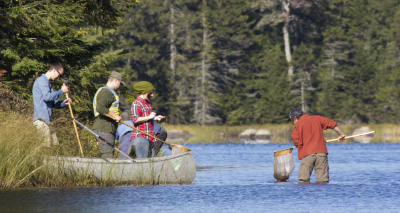
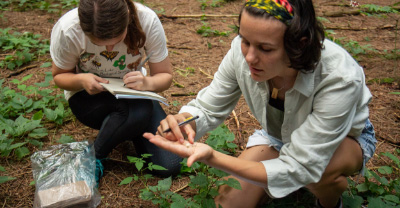
image of observing a lynx in the fieldESF's field stations are unmatched, and include the 6,000-hectare Huntington Forest and associated Adirondack Ecological Center, the Cranberry Lake Biological Station in the Adirondack Mountains and the Heiberg Forest south of Syracuse. Other field facilities are available on the St. Lawrence River, including the Thousand Islands Biological Station. These properties form a strong foundation for much of the coursework taken by undergraduate students and field research for graduate students. Undergraduates in Fish and Wildlife Science spend a summer taking classes at Cranberry Lake. Qualified undergraduates are encouraged to intern as field assistants with graduate students to gain direct experience with wildlife research.

Fish and wildlife programs at ESF date back to early studies of Adirondack fishes, and work in the Yellowstone National Park. These efforts quickly expanded to include formation of the Roosevelt Wild Life Station in 1919. The Roosevelt Wildlife Museum also was established, and currently houses over 20,000 specimens of vertebrates that are an integral part of today's teaching and research programs. Today, the faculty in fish and wildlife supervise more than $3 million in sponsored research and about 60 graduate students. While much of the research occurs in New York State, international opportunities are available and recent studies have been conducted in Canada, Mexico, Argentina and Madagascar. Studies range from restoration of species, to adaptive management of wildlife in forest ecosystems and urban areas. Technology is often central to this research including extensive use of computer systems, use of satellite imagery to evaluate habitat, and radio telemetry to study animal behavior and population dynamics.

Certification

Graduates can receive certification from either The Wildlife Society or The American Fisheris Society. Information on the coursework required for certification can be found by following the links below.

Faculty

photo of Guy Baldassarre

Guy Baldassarre
Distinguished Teaching Professor
PhD, Texas Tech University
Specialties: Waterfowl, shorebirds, flamingos, animal behavior, international management of waterfowl, wetland ecology
Teaching: Wildlife Biology and Management, Waterfowl Ecology
Other Responsibilities: Past Editor of the Journal of Wildlife Management
Telephone: 315-470-6739; E-mail: gabaldas@esf.edu


photo of John Farrell

John Farrell
Research Associate; Director of the Thousand Islands Biological Station
PhD, SUNY College of Environmental Science and Forestry
Specialties: Fisheries Management, Aquatic Ecology, Wetlands Restoration, St. Lawrence River Studies, Muskellunge and Northern Pike ecology and management, invasive species, zooplankton ecology.
Other Responsibilities: President of New York State Chapter of the American Fisheries Society.
Telephone: 315-470-6990; E-mail: jmfarrell@esf.edu


photo of Jacqueline Frair

Jacqueline Frair
Assistant Professor
PhD, University of Alberta
Specialties: Wildlife and landscape ecology; animal movements and habitat use; predator-prey interactions.
Telephone: 315-470-4905; E-mail: jfrair@esf.edu


photo of James Gibbs

James Gibbs
Associate Professor
PhD, Yale University
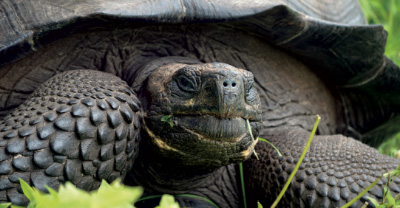
Specialties: Herpitiles, songbirds, giant tortoise, statistics, wildlife population monitoring, Galapagos Islands
Teaching: Wildlife Practicum, Conservation Biology Practicum, Herpetology, Ecological Monitoring
Telephone: 315-470-6764; E-mail: jpgibbs@syr.edu


photo of Karin Limburg

Karin Limburg
Associate Professor
PhD Cornell University
Specialties: Fisheries ecology, watershed ecology, systems ecology, ecological economics
Teaching: Fisheries Biology, Watershed Ecology, Advances in Otolith Research and Application
Telephone 315-470-6741; E-mail: klimburg@esf.edu


photo of Mark Lomolino

Mark Lomolino
Professor
PhD, Binghamton University
Specialties: Conservation biology of isolated biotas, biogeography
Teaching: Biodiversity and Geography of Nature, Diversity and Conservation of Mammals
Telephone: 315-470-6805; E-mail: island@esf.edu


photo of Dietland Müller-Schwarze

Dietland Müller-Schwarze
Professor
Specialties: Beavers, deer, chemical communication in mammals, animal behavior, chemical ecology
Teaching: Chemical communication
Telephone: 315-470-6801; E-mail: dmullers@esf.edu


photo of William Porter

William Porter
Professor; Director of the Adirondack Ecological Center; Director of the Roosevelt Wild Life Station
PhD, University of Minnesota
Specialties: Wild turkey, deer, habitat evaluation, satellite imagery, GIS, forest ecology, population ecology
Teaching: Management of Wildlife Habitats and Populations, Winter Mammalian Ecology
Other responsibilities: Editor of the 8th National Wild Turkey Symposium
Telephone: 315-470-6798; E-mail: wfporter@esf.edu


photo of Neil Ringler

Neil Ringler
Professor; Chairman of the Department of Environmental and Forest Biology
PhD, University of Michigan
Specialties: Fish Ecology
Teaching: Comparative Vertebrate Anatomy
Telephone 315-470-6770; E-mail: neilringler@esf.edu


photo of Kim Schulz

Kim Schulz
Assistant Professor
PhD, University of Michigan
Specialties: Aquatic Ecology, Limnology
Teaching: Limnology, Marine Ecology
Telephone 315-470-6808; E-mail: kschulz@esf.edu


photo of Donald Stewart

Donald Stewart
Professor
PhD, University of Wisconsin
Specialties: Fish Ecology and Population Biology, Energetics
Teaching: Fish Population Dynamics
Telephone 315- 470-6924; E-mail: djstewart@esf.edu


photo of Brian Underwood

Brian Underwood
Director of the USGS Cooperative Park Studies Unit
PhD, State University of New York
Specialties: Deer, small mammals, songbirds, statistics, population surveys, ecological modeling, National Park management
Teaching: Wildlife Practicum, Quantitative Studies Laboratory
Telephone: 315-470-6820; E-mail: hbunderw@syr.edu


State University of New York College of Environmental Science and Forestry
SUNY-ESF | 1 Forestry Drive | Syracuse, NY 13210 | 315-470-6500
Copyright © 2008 | Information | Webmaster