Disclaimer:
These notes are my personal notes. The course instructor or TAs have
no responsibility for the contents or any discrepancies between the materials
presented in the classroom and these notes. You cannot use or refer to these
notes to support or defend your answers on your exams. I suggest you use these
notes to complement your own notes, and not to solely rely on. I would
appreciate your feedback on any part of these notes that I may be
misunderstanding.
Ø Reading for Thursday: Read three chapters
from any chapters related to each plants, animals and detritus.
1. Estuaries
(section 2)
2.
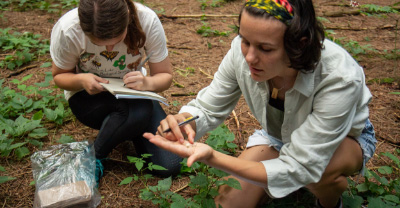
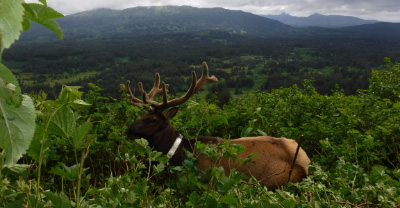
What Dr. Hall saw in Puerto Rican tropical forest
What is the
important issue about fisheries and estuaries?. Estuaries support large number
of fish.
What’s important
about fisheries beyond number of fish in estuaries? But diversity is not
necessarily high.
What gives an
estuary resilience in fishery? – High productivity of fish. Estuaries are
places of remarkably high fisheries. All the high fisheries sites of blue water
ecosystems are coast, most of them are estuarine-dependent fishes. The reason
of good fishing in coastal waters is fish production recover quickly after
harvesting. The productivity of fish <- prod’ty of zooplankton <- high
prod’ty of phytoplankton, and that of benthic algae, Spartina, mangroves
(in south).
Why is there
such high prod’ty of plants
Ø Energy subsidies, bringing nutrients from
open ocean and upstream.
Ø Nutrient cycling between euphotic zone
and bottom sediments due to shallowness.
The book says
particular type of diversity is important in the high prod’ty of estuaries.
Diversity of physical habitat leads to diversity of plant types -> All of
plants are productive, each of has asynchronous timing. Early in spring,
phytoplankton grow fast, as they depletes nutrients in water column, rooted
vegetation comes into play, using nutrients in the sediments. Then in fall,
they start to die back, bringing input of detritus, ex. Spartina.
Delayed input. continual pattern of increase in availability of plant material
is maintaining year-round high prod’ty.
Why are power
plants located in estuaries? – That’s where cities are.
Maybe diversity
of birds are higher than zooplankton or fish or whatever that live in the
estuaries because they don’t have to live in the medium. Birds are highly adaptable because they are
breathing air, can fly in and out as temperature gets hot or cold, and have
complicated behavioral possibilies where enhancing ability to go from one place
to another.
§
Greenness.
This is a TRF. A lot of rain.
§
Large
diversity in this greenness. Yet diversity is less than many other tropical
forests. In Luquillo mtns, there would be 200 species, most of which are
endemic. TRFs in similar latitude such as in Central America have 2000 species.
Q1)Why is the diversity higher than NY state. Q2)Why is only 10% of Cost Rica.
A2)Because Puerto Rico is islands.
Puerto Rico is a chain of islands were made from a volcanic hot spot.
A1) can’t answer.
·
Walking
around in TRF is not difficult. Because canopy is very dense. There is not much
on forest floor. European explorers had the image of impenetrable jungle from
the appearance of forest along the river.
·
There was
barely a litter layer. But organic soil was very thin. Why? - high
decomposition rate because it’s warm and moist.
·
Animals are
not obvious except when raining. Mangoose. A lot of exotics.
·
Temperature
was extremely pleasant. Trade winds are always blowing, especially in the
mountains. Very steep.
·
Hurricane –
disturbance is always important.
·
Vegetation
is extremely responsive to gradient from elevation.
About Siripun’s
presentation and Thai Tropical Rain Forest:
One curious thing is that agriculture is less
in the tropics than in the temperate zones.
|
|
If the corn
productivity in tropics is about 1.5, temperate zone’s is about 6.0. Why should
that be? Days are shorter, nights are longer in growing season. There never are
days longer than 11 hours. During long nights they burn much of the day’s
profits through respiration. In NY state, day length in growing season could
get 17-18 hours and only 6 hours of nights.
On the other
hand, trees have to maintain their metabolic functions every month, even during
winter. It’s more favorable for trees to be in the tropics.
The growth of
trees in Finland is only 3 cu. m/ha/yr. That of Malaysia is about 6x greater
than that of Finland. If you are in charge of whole world, you might say we
should have forestry production in the tropics and food production in temperate
zones.
·
Delaware
Bay & Chesapeake Bay: Cities tend to be on and impact estuaries. But
estuaries can withstand a large amount of impact largely because they are so
productive. Delaware Bay is not very productive. Chesapeake Bay is
extraordinarily productive.
North Carolina offshore islands are not particularly productive, either. Not all the estuaries are highly productive. When even not highly productive estuarine envron is still more productive than surrounding environ.
North
Carolina changed pollution laws and brought in hog farms to enhance agri.
production. Runoff from hog waste pits ran into the river and created a mess.
Iowa produce hogs, too, utilizing their waste for hog food production. NC does
not do well producing hog food. NC transport hog waste as fertlizer to Iowa,
Iowa produce hog food and transport it back to NC for hog production.
·
Carolina
barrier islands region: the complexity of hydrology of estuarine. Different
sources of water meet and mix at the estuary.
·
Sea
islands. Charleston to N. Florida. Univ. of Georgia has had a long-standing
estuarine research station in Sapelo Island, studied salt marshes. E. Odum
started lots of work.
·
Spartina
flat, salt marsh, barrier islands
·
Further
down south: Northern Florida don’t have particularly have estuarine areas. High
energy beaches where you can’t have development of marsh.
Mangrove tend to replace salt marshes in ?? areas. If you are interested in mangrove estuaries, read Twilley’s paper in Maximum Power.
·
Hobos(?)
bay, southern Puerto Rico: as you get into tropics, functional role of salt marshes
where you have low energy environ is replaced by Mangroves.
·
Mangrove
environment: 3 species in America and 8 to 10 species in the world. Most
threatened ecosystems on the planet. Mangroves are very useful for people. Hardwood, fuel, construction material. Also
useful as nursery areas. Past Bill Odum (E. Odum’s son) studied and found out
all the food chain led back to mangrove. Red mangrove tends to be found the
edge of tidal channels, then back to inland, white black mangroves and white
mangroves. What condition favor red vs. black vs. white mangroves? Salt
concentration is higher in white mangrove habitat->zonation.
§
Interior of
mangrove area: one of the most useful function of mangrove is as a hurricane
barrier. Mangrove absorbs the energy of hurricane. The damage to mangrove and
the surrounding environment is much less. Artificial seawall reflects all the
energy intact back out and down. The reflected energy dig the seawall itself.
Engineers learned from mangroves and created new structure that dissipates the
hurricane energy.
·
Turtle
grass: Each environment has its own marine grass. Turtles take a bite and the
piece becomes part of detritus food chain. In general, in each of grass areas,
there’s associated particular type of clams. Oyster associated,
scallop-associated grasses,etc. Each latitude has its own grass type, and its
own shell fish associated with it. Is there a symbiotic relation? Shell fish
clear the water making it clear to enhance the prod’ty for seagrass, and this
generates more prod’ty and more detritus for shell fish.
·
St. Louis,
Mississippi: tidal field without Spartina, but with Scirpus or Juncus.
Last modified:
April 5, 2001
Any comments?
E-mail to akogawa@syr.edu