![]() |
The Tinkerer's Accomplice How Design Emerges from Life Itself 1 January 2007 |
![]() |
![]() |
|||||||
|
From the Harvard University Press Fall/Winter 2006 Catalog: Most people, when they contemplate the living world, conclude that it is a designed place. So it is jarring when biologists come along and say this is all wrong. What most people see as design, they say—purposeful, directed, even intelligent—is only an illusion, something cooked up in a mind that is eager to see purpose where none exists. In these days of increasingly assertive challenges to Darwinism, the question becomes acute: is our perception of design simply a mental figment, or is there something deeper at work? Physiologist |
||||||||||
| My home page
My blog |
||||||||||
| ISBN-10: 0-674-02353-6 ISBN-13: 978-0-674-02353-6 250 pages $27.95 (£ 18.95 UK) Harvard University Press Home |
||||||||||
| 315 470 6806 (office) 315 481 2396 (mobile) 315 470 6934 (fax) jsturner@mailbox.syr.edu |
||||||||||
| Bibliographic information Hardcover: The Tinkerer's Accomplice. How Design Emerges from Life Itself. 2006. Harvard University Press, Cambridge, Massachusetts. ISBN-10: 0-674-02353-6, ISBN-13: 978-0-674-02353-6, 282 pages, 38 halftones, 7X9.25" |
||||||||||
|
"Impressively wide ranging and knowledgeable about the animal’s world, Lynn Margulis, University of Massachusetts at Amherst, Author of Symbiotic Planet "Physiologists have traditionally had little to say about evolution, but in this important book,
Geerat Vermeij,
|
||||||||||
|
"Turner addresses a tricky question: if trial-and-error Darwinism rests on solid research and plentiful evidence, and Intelligent Design is little more than religion's hollow Trojan horse, from where does the 'self-evident design of the living world' spring? ... He makes his case in a way that's as scientific as any biologist's, using thorough research and enlightening illustrations ... pop culture analogies ... a friendly voice and personal anecdotes, making this a largely welcoming science book ...His unwavering passion for the topic, combined with a sharp focus, makes Turner's latest ideal for science types, design lovers and anyone who's unashamedly analytical about everyday life." Publisher's Weekly. 9 January 2007 Assuring readers that he is neither challenging Darwinism nor slipping a disguise over so-called intelligent design, Turner holds that blindly operating natural selection does not preclude what he interprets as intentional biological activity. Not a crank, Turner is a conventional scientist and an expert on termite mounds (The Extended Organism: The Physiology of Animal-Built Structures, 2000). The evidence he adduces does not, Turner often notes, necessitate an organism's awareness of anything, for the intentionality he argues for generally occurs at the level of cells and tissues. He specifically examines the skin of sharks, blood vessels, linings of digestive tracts, and the formation of antlers and bone and other specialized structures, for which a biology background would be helpful to readers' understanding. More accessible are Turner's more philosophical turns, which concede that molecular biology is an indispensable yet somehow incomplete explanation of how bodily structures arise in animals. Though technical to an extent, Turner's thesis should gain traction with those thinking and debating issues in evolution. Gilbert Taylor in Booklist Online It is fun to read Turner’s prose, to learn from him about self-organizing systems and their enormous significance in evolution, and to think through his arguments, with all their accompanying intellectual challenges. ... When he explains, for example, the thoughts and observations that led to his understanding of how termite chimneys not only capture wind to power ventilation but also regulate its capture, and how this makes the chimney an organ of homeo stasis, his narrative skills make you feel as if you were sitting with him at a fireplace in the African bush. When he explains the self-organization of blood vessels, or the way the digestive tract develops and continuously adapts its functionality, you might feel as if you are in the office of a senior professor who is carried away by his enthusiasm for the subject. ...This important book is for those who search for an understanding of the various forms that life can take and of how life works. It is also a wonderful book for physiology students, especially for those who could use a motivational kick to help them continue their studies. Claus Wedekind in Nature 446/22 March 2007: 375 (2007) The Tinkerer’s Accomplice provides an excellent companion and counterbalance to Richard Dawkins’ popular book The Selfish Gene. If you have forgotten, or never thought to marvel at, the miracle of life, read Turner’s book. As he delves into the details of animal form and function, you will be struck again and again with wonderment that such intricate mechanisms can exist, much less evolve. But evolve they did, and Turner wants to make sure we view the process through a physiological lens. As he demonstrates, “Living structures are not distinct from the function they support; they are themselves the function, no different in principle from the physiology that goes on there. Blake Suttle in Science and Spirit March/April 2007 The Tinkerer's Accomplice is a rich mine of fascinating cases in which homeostasis helps an organism or even whole populations of organisms to survive. This is no Dick and Jane book ... That said, Turner has given us a compelling account of how concepts of purpose, design, intentionality and goal orientation can enhance the basic ideas of evolution. Carl Keener in The Christian Century June 26, 2007 |
||||||||||
|
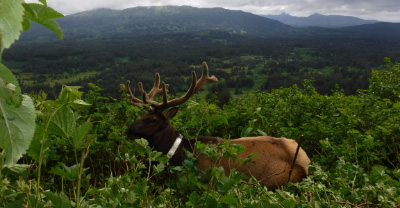
This book is about why organisms work well, or to put it another way, why they seem to be “designed.” Before I elaborate, I should mention two things the book is not. First, it is not about Intelligent Design (ID). Although I touch upon ID obliquely from time-to-time, I do so not because I endorse it, but because it is mostly unavoidable. ID theory is essentially warmed-over natural theology, but there is, at its core, a serious point that deserves serious attention. Before your hackles rise too much, let me hasten to say that the serious point is not the one that ID enthusiasts would like it to be. ID theory would like us to believe that some overarching intelligence lurks at the heart of the evolutionary process: to say the least, that is unlikely. Nevertheless, how design arises remains a very real problem in biology. This would be a good point to note the second thing the book is not: it is not a critique of Darwinism, which, as Dr Seuss might have put it, is about as true as any thought that has ever been thunk.[1] Which brings us back to what this book is about … My thesis is quite simple: organisms are designed not so much because natural selection of particular genes has made them that way, but because agents of homeostasis build them that way. These agents’ modus operandi is to construct environments upon which homeostasis can be imposed, and design is the result. This is largely the same idea I applied to the problem of animal-built structures in The Extended Organism, but here the focus is on more conventional “inside-the-skin” physiology. We do venture outside the skin, though, to explore what the link between homeostasis and design might mean for how we think about evolution. Chapter 1. Cleanthes' dilemma The first chapter introduces the book’s theme, which is to resolve a seeming contradiction in current evolutionary biology. On the one hand, the living world appears to be a designed place, in which there is seeming foresight, intelligence, and craftsmanship in the structure and function of organisms. On the other hand, our modern conceptions of evolution do not admit concepts seemingly essential to design, like planning and foresight. This issue has traditionally been resolved by likening evolution to “tinkering”, the cobbling together of contrived solutions to immediate adaptive problems, most of which fail, but some of which work and are naturally selected. This “solution” to the problem is unsatisfactory, though, because it cannot be used to resolve the essential difference between a structure that is designed versus one that is only “apparently designed.” I illustrate this through a discussion of the “evolution” of packaging of frozen orange juice. I conclude with the theme that will be developed in the book, namely that the tinkerer needs an accomplice, to wit, the physiological mechanisms which integrate genome and phenotype into an integrated and well-functioning whole.Top In Chapter 2, I sketch out the working theory for design that I will develop in the book. It is a personal chapter, telling how I came across the remarkable structures built by the fungus-growing termites of southern Multicellular organisms are held together by webs of fibrous proteins known collectively as the connective tissue. Connective tissue is not simply a collection of collagen fibers; it is a dynamic living system that is continually being remodeled by agents of homeostasis, fibroblasts in this instance. These cells weave and continually re-weave webs of collagen, seemingly to the end of regulating tension in the fibers. When tension in collagen fibers falls outside of set limits, remodeling of the collagen network ensues: excessive strain prompts adding fibers, while unstrained fibers tend to be pruned. At the organism scale, this tension homeostasis produces highly organized collagen meshworks, cable-like tendons connecting muscles to bone, or “socks” of collagen fibers that envelop the body in helically-wound wraps. The interesting twist here is how a supposedly conservative force like homeostasis can nevertheless generate functional versatility, as reflected in the diversity of helical windings of collagen fibers that are found among animals.Top The vascular systems of vertebrates seem to be very well-designed, constructed to minimize work of transport while maximizing efficiency of exchange. The arterial system is a good example of a “self-designed” structure, in which broad patterns of development are influenced by local feedback controls which sense and regulate the local flow environment. This chapter explores the principles behind such “self-designed” systems, and explores the specific mechanisms that generate and adjust the architecture of the vertebrate arterial vascular system. The chapter also traces the genesis of a “well-designed” vascular system during embryogenesis, and makes the point that the embryo must make two tries at building its circulatory system. The first, genetically driven try, produces a basic layout that is nevertheless a poorly designed system. The second try, which produces a well-designed system, is the product of endothelial cells acting as agents of homeostasis, modifying their environment to produce a “comfortable” strain environment throughout the system.Top Chapter 5. Knowledgeable bones Skeletal structures show many features of optimal design, for example in the dimensions of bones. Bones are also dynamically constructed by networks of embedded cells known as osteocytes, derived from the same lineage as fibroblasts. Like fibroblasts, osteocytes are exquisitely sensitive to the strain environment, and they can act as Bernard machines, adjusting architecture to maintain strains within set limits. Bone design is the product of an ecological interaction between the osteocytic agents of homeostasis and another cell line, osteoclasts, which act as agents of disturbance. Bone design is something more, though, because bone strains are actively monitored by the central nervous system, which can feed back and alter bone structure in seemingly intentional ways. This is illustrated by the phenomenon of shape memory in antlers, in which a well-designed osseous structure, antlers, are grown anew each year, yet are not “trained by strain” as locomotory bones are. This means that bone design is under a form of intentional control by the nervous system.Top This chapter takes up the question: what is it that makes animals uniquely adaptable creatures? I argue that the real innovation that sets apart animals from other creatures is not their unique embryogenesis, as many have argued, but the invention of the epithelium. Organizing cells into epithelial sheets enables assemblages of cells to impose homeostasis on environments at a massive scale, a capability that evades single-celled and other multicultural creatures that lack epithelia. Among other things, this gives a rationale for the complicated folding maneuvers – embryonic origami – that characterizes animal embryogenesis. Using the evolution of the unique body forms of the Precambrian Vendozoa and Ediacaran animals, I argue that epithelia conferred a kind of “value-added” physiology that has propelled the animals on their spectacular evolutionary arc.Top Intestines and digestive systems are a major epithelium-delimited interface between an organism and its environment. The space contained within the intestine is also an important site of imposed environmental homeostasis. As bones and circulatory systems do, intestines have objectively definable attributes of good design, which they often meet. Remarkably, the genetic determinants of gut architecture do not produce a structure that functions well. Gut architecture is brought to good design by agents of homeostasis that rebuild the genetically-determined foundation structure. Unlike bones and circulatory systems, however, optimal guts are restructured by an interaction with a “foreign” agency, a “bottom-up” control by the microbial communities within the gut. Good design of intestinal systems, therefore, subverts the pursuit of disparate genetic interests to the support of common physiological interests, a “physiological conspiracy" that subverts the “top-down” control of architecture by the organism's genes.Top Chapter 8. An intentional aside The distinction between design and “apparent design” reflects a broader philosophical question, namely the proper place of doctrines of ends and purposes - teleology - in biology. That biologists draw the distinction between actual and apparent design is therefore as much a philosophical question as it is a scientific one. This chapter considers the philosophical roots of the problem of teleology, and outlines some of the historical framework behind modern biology’s rejection of it. I argue that biology has rightly divorced itself from teleological interpretations of biological history - evolution, but that rejecting it for the adaptation that drives the process of evolution may have been less wise. Our common way to divorce teleology from biological design has been to distinguish between the “good” teleology of physiological systems, which lack intention or foresight, and the “bad” teleology of forward-looking intentional systems. These distinctions are not really useful, however, and they have been drawn mostly as a way of avoiding, rather than confronting, the uncomfortable question of purposefulness in biology,. In the absence of any robust distinctions between “good” and “bad” teleology, the main legacy of the division has been to divide biology into a series of independent subdisciplines, not the unified science it should be.Top Homeostasis often involves managing flows of matter and energy, but it also involves managing flow of information. Animals are among the most sophisticated managers of information, and they are able to do so largely because of another aspect of the “value-added" physiology conferred by epithelia. Most sensory structures are based upon sheets of cells that map information about the three-dimensional world onto two dimensional images, which are then used to reconstruct a mental representation of the "real world." I explore this process using the mammalian visual system, introducing the principle that vision is built upon “many retinas”, multiple representations of the world built upon sensible sheets of cells in the eyes, diencephalon and cerebral cortex. I argue that the real design problem for eyes is not their marvelous optical contrivances, as Victorian critics and supporters of Darwinism supposed, but in the complex computational architecture of vision. Remarkably, this architecture is largely a product of assemblages of competing and cooperating cells, striving for stability in a complex "brain ecosystem." Top Intentionality is at the heart of the phenomenon of biological design. This chapter looks at the neural architecture of intentionality, with the aim of answering the question: how could unintentional purposeless natural selection produce intentional purposeful beings like us? I pose the question in terms of a metaphor: is cognition computation or is it ecology? I explore this in the framework of understanding various cognitive deficits, like addiction and schizophrenia. These all point to the conclusion that cognition is, at root, a phenomenon of brain ecology more than the product of a brain “supercomputer.” Cognition has evolved because there is selective value in the cognitive brain ecosystem building accurate mental representations of the world. Intentionality is the process of cognition in reverse, driven by brain homeostasis. New mental images of the world can arise without reference to the "real world", which sets up a disparity between the mental world and the sensory representation of the "real world." Intentionality is a form of homeostasis where the world is manipulated to bring it into conformity with the brain’s novel mental representation of it, actively “making a future happen.” I conclude by suggesting that the divorce of Darwinism from frank intentionality may have been a mistake, and that Darwinism can become a fully credible theory of evolution only if it embraces intentionality again. Top Chapter 11. Biology’s bright lines This chapter deals with the “bright lines” that divide modern biology into multiple disciplines – molecular, physiological, zoological, botanical, and so forth – and explores why they exist. The principal thesis advanced here is that the fracturing of biology is a consequence of an essentially atomist mind-set that places “atoms of heredity” – genes – as the central players in evolution and physiology. This chapter reviews various new findings on the nature of the gene and the challenges these new findings pose for biology’s central dogma: that “function radiates like light from the central sun of DNA.” The chapter introduces the crucial concept of “persistors”, physiologically competent environments, which are the physiological counterpart to replicators. The chapter also introduces the hypothesis that evolution plays out not as a selection of replicators, but as interplay between persistors and replicators. The chapter contains several examples to illustrate these concepts, ranging from prion-like replication factors to broad scale modifications of the environment by termites that serves as a kind of ecological inheritance that complements the genetic inheritance through lineages. Top |
||||||||||