Making a Difference
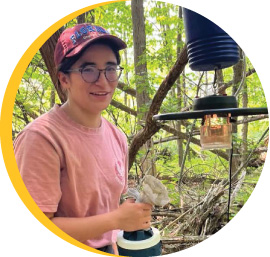 Thanks to donor support, Melia Kanaovicz, a senior environmental biology major at
ESF, spent her summer contributing to a groundbreaking mosquito surveillance program
in St. Lawrence County; an effort that’s already making a difference in public health.
Thanks to donor support, Melia Kanaovicz, a senior environmental biology major at
ESF, spent her summer contributing to a groundbreaking mosquito surveillance program
in St. Lawrence County; an effort that’s already making a difference in public health.
In 2024, the county experienced fatal horse cases of Eastern Equine Encephalitis (EEE), a rare but deadly virus spread by mosquitoes. With no existing monitoring infrastructure, ESF alumna and Deputy Director of Public Health Carly Zimmerman reached out to ESF for support. Dr. Brian Leydet, an expert in mosquito- and tick-borne diseases, helped develop a new program with the help of students, including Melia.
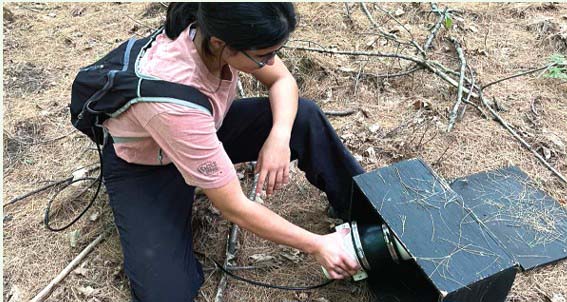
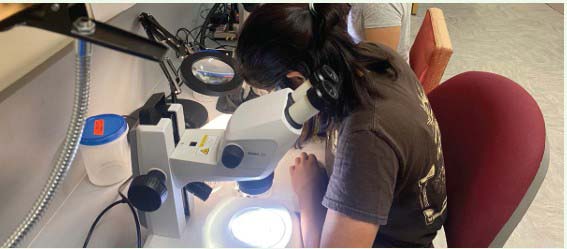
Melia deployed mosquito traps across the county, made and transported dry ice for bait, sorted and identified mosquito species in the lab, and prepared samples for virus testing in Albany. She even gave a local radio interview to raise awareness about the project. “This was my first season of proper field work,” she said. “It was incredibly rewarding to contribute to something that will continue to benefit public health in the county.”
 Mosquitoes were tested for 10 viruses, including EEE and West Nile. The detection
of West Nile virus triggered realtime public health alerts. With the program’s success,
the St. Lawrence County Health Department is now budgeting to continue mosquito surveillance,
with plans for more student engagement, data collection, and publications.
Mosquitoes were tested for 10 viruses, including EEE and West Nile. The detection
of West Nile virus triggered realtime public health alerts. With the program’s success,
the St. Lawrence County Health Department is now budgeting to continue mosquito surveillance,
with plans for more student engagement, data collection, and publications.
Melia also conducted an independent research project at ESF’s Ranger School, where she was housed thanks to the support of Dr. Mariann Johnston. There, she identified Culex erraticus, a mosquito species not previously documented in this part of New York State. Her discovery will form the basis of her honors thesis and is being developed into a scientific paper in collaboration with a graduate student in the Leydet Lab.
The experience gave Melia her first real taste of fieldwork and confirmed her passion for disease ecology. “I’m interested in how wildlife disease spreads, and how different ecological communities may be related to public health,” she shared. “This internship gave me the opportunity to explore that interest and meet professionals in the field.”
 Melia is clear that this opportunity wouldn’t have been possible without donor support.
“Without it, I would have been unable to work with the St. Lawrence County Health
Department… I would have likely not been able to spend my summer doing work that is
so closely related to my future career aspirations.”
Melia is clear that this opportunity wouldn’t have been possible without donor support.
“Without it, I would have been unable to work with the St. Lawrence County Health
Department… I would have likely not been able to spend my summer doing work that is
so closely related to my future career aspirations.”
Thanks to the generosity of donors, Melia gained valuable skills, built lasting professional connections, and helped create a program that will continue to protect public health in her community for years to come.