Nuts About the Chestnut Tree
By Judy Gelman Myers
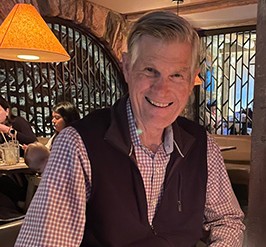 Walter Sall ʼ66 always wanted to be a forest ranger. When it came time to apply to
college, his mother wanted him to attend the forestry school at Yale, but Walter chose
ESF—“a real forestry school,” in his words—where he had the time of his life.
“It was more fun than you could possibly believe,” Sall said. He sawed down trees and chopped wood with his Kappa Phi Delta fraternity brothers. He fought forest fires during the 1964 drought. ESF wasnʼt all fun, though. As a freshman in Wood Products Engineering, Sall had labs every afternoon. He was shocked at being in school from 8 to 5, but despite that, he signed on as a lab assistant the following year.
Through ESF, Sall got two summer forestry jobs in Wisconsin and Idaho. On one uneventful night in Idaho, Sall switched on the TV, which happened to be showing a 1937 Cary Grant film about the Fisk and Gould conspiracy to corner the market in gold. “I knew nothing about finance, but even imagining doing something like that was the most interesting thing I'd ever seen in my life,” said Sall. On his return to ESF, he signed up for business classes at Syracuse University. He went on to earn an MBA in Finance at the Wharton School of Business and got a job with an investment firm in New York City.
One day a friend called. He was providing the financial backing for a new company in Cincinnati and wanted to know if Sall would join him. Said Sall, “My wife and I had to look at a map to find Cincinnati. But it was a good opportunity, so we put the kids in the car, drove out, and lived there for thirty-two years.” Just before the financial collapse of 2007, Sall and his partner sold the business. Sall stayed on for the transition, then retired to begin his philanthropic career in earnest.
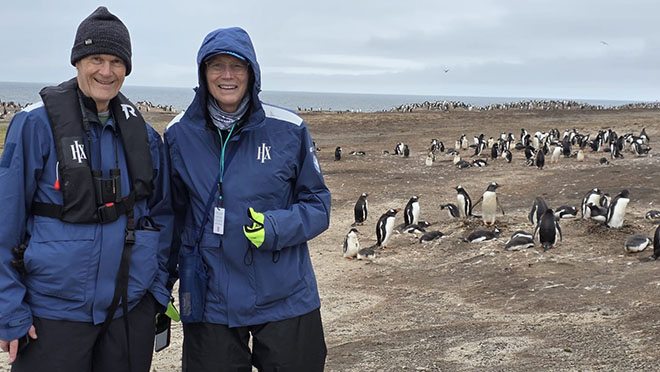 Sall has been giving to ESF since the early 1980s. In 2015, he made his first donation
to the American Chestnut Project. It aims to restore the American chestnut tree, which
became functionally extinct when a fungus wiped out billions of trees in the eastern
US. Since retiring, Sall has become one of the projectʼs biggest single contributors.
The project is currently led by Andrew Newhouse, Ph.D. ʼ05. While other programs have attempted to restore the American chestnut using conventional cross-breeding, ESFʼs American Chestnut Project employed genetic engineering to create the first blight-tolerant fully American chestnut tree, dubbed Darling 54. The blight tolerance is conferred by a single gene, increasing the likelihood the trait will be both heritable and stable in future populations.
In August 2026, Darling 54 cleared a major federal hurdle: it was officially deregulated by the USDA. Additional EPA review is needed before these trees can be used for wild restoration plantings, but Dr. Newhouse and his team have high hopes that Darling 54 will be approved for distribution soon. “This approval of Darling 54 is a huge milestone toward American chestnut restoration, and offers a precedent for using modern technologies to protect other threatened trees as well,” says Dr. Newhouse.
That makes Walter Sall very happy. “I have focused on the American Chestnut Project because I believe in it,” he said. For Dr. Newhouse, that kind of support is key to the projectʼs success. “Our research team works better because of the enthusiasm of donors and supporters like Walter. When we interact with them, their excitement gets us excited, too.”