Following the Science: New Discoveries in ESF's Harmful Algal Bloom Research
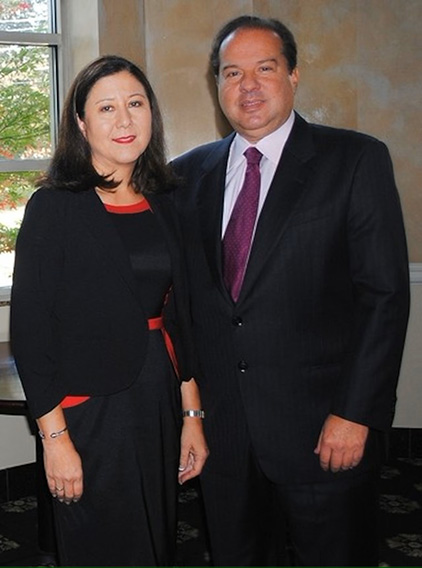 When philanthropists Sam and Carol Nappi committed $2 million in 2025 to support ESFʼs
harmful algal bloom (HAB) research on Skaneateles Lake, the goal was to better understand
the factors contributing to the blooms and identify solutions to protect this vital
water resource. Since then, the project has evolved in exciting and unexpected ways,
demonstrating the value of sustained philanthropic support that gives ESF scientists
the flexibility to follow new discoveries wherever the research may lead.
Headed up by ERE Department Chair Dr. Stephen Shaw, ESF researchers are uncovering new insights into the changing ecology of Skaneateles Lake while pursuing leads that emerged only after the project was underway. According to Dr. Shaw, “the Nappi’s generosity has allowed for letting the science guide the next question to investigate, a flexibility not possible in many studies.”
One of the most significant developments has come through a partnership with the City of Syracuse. In 2025, researchers were given access to a 52-year record of algal population data that had recently been digitized from paper files. Analysis of this remarkable dataset revealed that cyanobacteria, the group of organisms often associated with harmful algal blooms, began increasing in the early 2010s, several years before Skaneateles Lakeʼs first documented HAB event in 2017.
By comparing those trends with changes in water temperature, nutrient levels, tributary inflows, and invasive species populations, ESF researchers have identified a possible connection between three distinct variables: increased cyanobacteria, warming lake temperatures, and the expansion of quagga mussels, an invasive species known to alter aquatic ecosystems. These findings are helping scientists better understand the complex environmental changes occurring within Skaneateles Lake.
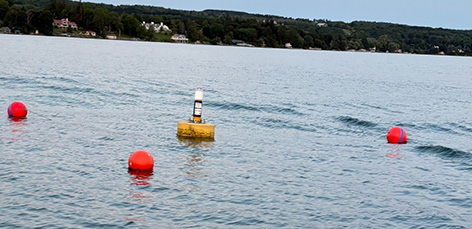
Another major milestone came in August 2026 with the installation of a research buoy about three miles south of the Village of Skaneateles. Equipped with 15 temperature sensors, the buoy will help researchers explore how strong winds affect Skaneateles Lake. They suspect that these wind events may move deeper, nutrient-rich water into shallower areas, creating conditions that can fuel the algal blooms. This monitoring system will allow researchers to evaluate their hypothesis over multiple years while considering other contributing factors, including nutrient inputs from the Lakeʼs tributaries.
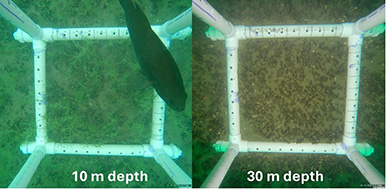
The sustained support behind this project has also created valuable hands-on experiential learning opportunities for ESF students. Several ESF undergrads designed and tested an innovative lake-bottom imaging system using a GoPro camera, submersible lights, and PVC pipe. The low-cost device allows researchers to document quagga mussel populations in deep water without relying on scuba diving, and can be deployed from small boats in water up to 100 feet deep.
For Sam and Carol Nappi, support for ESF’s HAB research reflects a deep personal connection to Skaneateles Lake and a longstanding commitment to protecting its water quality. The Lake has been part of the Nappi family’s story for four generations. More than a century ago, Sam Nappiʼs grandfather helped install the intake pipes that continue to deliver drinking water to Syracuse and surrounding communities. That legacy helped inspire the Nappisʼ investment in this project. Today, their support is helping ESF researchers deepen our overall understanding of Skaneateles Lake while also generating knowledge that could inform the protection of freshwater resources for generations to come.