Recent Headlines
- Leaders Across Central New York and New York State Reflect on President Joanie Mahoney’s Legacy
- ESF President Joanie Mahoney Announces Plans to Retire in 2027
- SUNY ESF, DEC Expand Statewide Internship Partnership with $6.7 Million Agreement Through 2030
- ESF's Destinations & Degrees Draws Record Crowd of Students, Employers and Graduate Schools
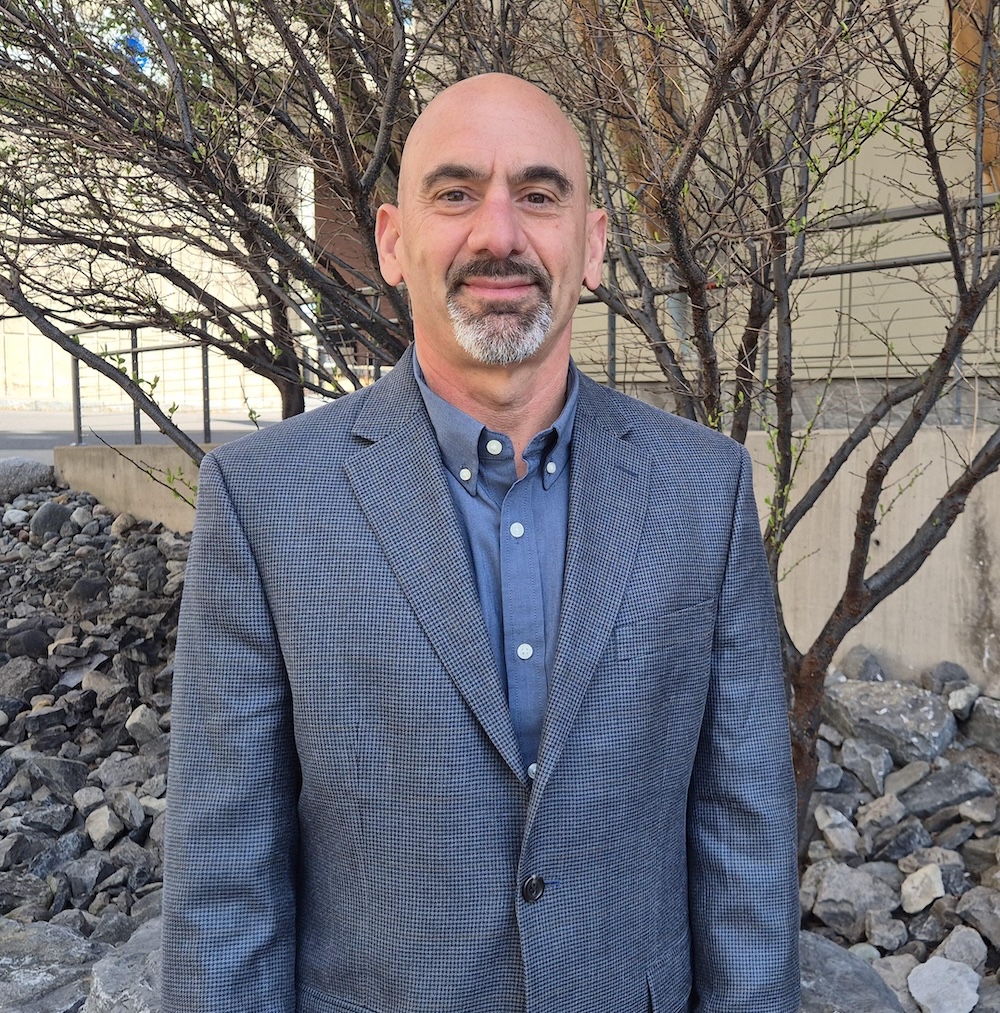
Dr. John Stella
Dr. John Stella Named ESF Exemplary Researcher
SYRACUSE, N.Y. — May 6, 2026 — Dr. John Stella has been named Exemplary Researcher for 2026-27 at the SUNY College of Environmental Science and Forestry. The Exemplary Researcher Award recognizes active researchers who demonstrate outstanding publication records, impactful research programs and strong mentorship of graduate and undergraduate students.
“We are thrilled to recognize Dr. John Stella as an Exemplary Researcher,” said ESF President Joanie Mahoney. “Dr. Stella’s influential scholarship, sustained research leadership and deep commitment to mentoring students reflect the highest standards of excellence at ESF. Congratulations, John, on this well-deserved honor.”
Stella is a full professor in the Department of Sustainable Resources Management, where he has served for 20 years. During that time, he has built one of the most consistently productive and externally visible research programs at ESF, marked by landmark publications, sustained competitive funding and student mentorship. He also provided significant institutional service as vice president for research from 2021 to 2024.
He is the author or co-author of 70 peer-reviewed publications and 12 book chapters, with work published in leading environmental science journals. His research focuses on how climate and water availability shape the health and resilience of riparian ecosystems, a topic of increasing urgency as droughts intensify across the western United States and globally.
As a mentor, Stella has guided 22 students and trainees at ESF, including four doctoral students, 14 master’s and professional studies graduates, one undergraduate Honors student and three postdoctoral fellows. His former students now hold positions in university research programs, federal agencies and environmental nongovernmental organizations.
Stella has delivered more than a dozen invited presentations internationally, organized special sessions at the American Geophysical Union and Ecological Society of America annual meetings and served as subject-matter editor of Ecological Applications since 2016. He also held a Faculty Fellowship from the European Institute for Advanced Study in Lyon, France. His spring 2025 sabbatical with the University of California, Berkeley’s Freshwater Group produced seven manuscripts and a new $1.5 million collaborative grant.
Over his career, Stella has secured more than $7.5 million in competitive external funding from sources including the National Science Foundation, the U.S. Department of Defense’s Strategic Environmental Research and Development Program, the U.S. Department of Agriculture, The Nature Conservancy and the European Institute for Advanced Study. Most recently, he joined as co-principal investigator on a $1.5 million Bay-Delta Science award for 2026-28, placing ESF research at the center of California water policy research.
As vice president for research, Stella led ESF’s research enterprise during a critical post-pandemic transition period. Under his leadership, ESF research expenditures grew from $15 million to $22.5 million, a 50 percent increase over three years and the largest period of sustained research growth in the College’s history.
About SUNY ESF
The SUNY College of Environmental Science and Forestry (ESF) is dedicated to the study of the environment, developing renewable technologies, and building a sustainable and resilient future through design, policy, and management of the environment and natural resources. Members of the College community share a passion for protecting the health of the planet and a deep commitment to the rigorous application of science to improve the way humans interact with the world. The College offers academic programs ranging from the associate of applied science to the Doctor of Philosophy. ESF students live, study and do research on the main campus in Syracuse, N.Y., and on 25,000 acres of field stations in a variety of ecosystems across the state.