About
Center for Community and Regional Design
CCRD works with communities across Central New York (CNY) on planning and design, from designs for single sites to plans for the region’s long-term future. We have the freedom and flexibility to explore a wide range of alternatives, and we also work in regions outside CNY where the planning and design needs are suited to our expertise. By staying abreast of current events shaping the region/world and national/international best practices, CCRD curates and shares planning and design exemplars.
Our Executive Director Dr. Margaret Bryant and Assistant Director Anukampa Freedom Gupta-Fonner operate within a community of committed faculty and accomplished students who have a passion for the transformative effects of good planning and design.
Through CCRD, students work directly with community members in ways that enrich all participants. We pride ourselves on our ability to provide students with exposure to professional practice exposure and experience through our work.
Community strengthening and learning-by-doing are at the core of CCRD’s operating ethos. We are fueled by the passion of our students who have a relentlessness for learning and creating new knowledge. The combination of students and community members is powerful. For students, CCRD bridges the gap between formal education and future jobs, supporting career development while also benefitting our community partners.
Vision, Mission, Values, and Approach
Vision: We envision a Central New York that meets a time of rapid change with imagination and care. We see communities shaped by the people who live in them; main streets, parks, and public spaces that bring people together; the built environment existing in balance with ecological systems; and residents and students alike seeing that their ideas can shape the places they call home.
Mission: CCRD strengthens communities through applied research and technical assistance, while preparing students for interdisciplinary, community-centered practice.
Values:
Learner's Mindset: We respect scientific, local, experiential, and Indigenous ways of knowing, and work as partners with communities.
Care. We listen deeply, share expertise thoughtfully, and work adaptively, testing ideas, gathering feedback, and adjusting as we go.
Joy and Empathy. We bring creativity and optimism to projects, work closely with the people and places involved, and are sensitive to anxieties about the future.
Sustained Engagement. We aim to leave places, people, and relationships better than we found them, and we seek to stay engaged beyond single projects or semesters.
Ingenuity. We believe in creating new ways of seeing, building new knowledge, and exploring pathways for low-cost innovation.
Approach: CCRD brings systems thinking and ecological design to questions posed by community partners, from where to build to how places fit within watersheds, habitats, and regional networks. Through design studios, planning studies, and faculty/student research, CCRD develops exploratory alternatives that bring fresh ideas into regional conversations about growth and change.
We develop land use planning and site design options, show how we developed them, and make the trade-offs clear. This information informs decision making by communities and their elected officials.
We are nonpartisan, and we do not endorse or oppose specific development proposals because we believe that our work is most useful when everyone can rely on it to be fair, based on evidence, and open about how it was developed. We do stand for how planning should be done: grounded in the best available evidence, with real opportunities for the people affected to be heard, and attentive to land, water, and living systems.
Our Team
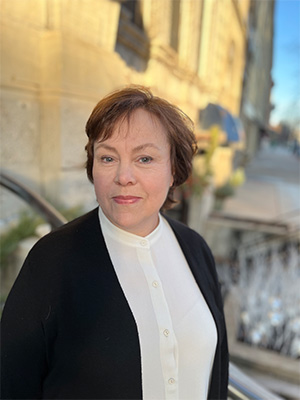
M. Margaret Bryant, Ph.D.
Executive Director, CCRD
Associate Professor, Department of Landscape Architecture
Dr. Margaret Bryant brings a depth of experience to CCRD, having worked in urban and regional planning and landscape architecture for over 35 years in New York, Virginia, Georgia, and Massachusetts. Dr. Bryant is the former Chair of the Department of Landscape Architecture at SUNY ESF. She believes that the design process is a powerful way to see possible futures and that anyone can learn to employ it. Dr. Bryant began her career with work in regional planning agencies and multidisciplinary firms where her knowledge of ecological science and geographic information systems made her a valuable team member. She is an award-winning teacher and has devoted over 25 years to the education of landscape architecture students, something she sees as a special privilege and delight. Working with communities has been at the center of Dr. Bryant’s teaching career, with projects carried out in design studios and through work with graduate students. She is eager to build on her experience to establish CCRD as a premier source of planning and design support in the region, State of New York, and beyond.
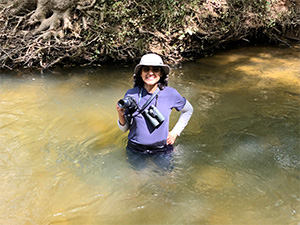
Anukampa Freedom Gupta-Fonner, M.P.A.
Assistant Director, CCRD
Freedom is a Social Entrepreneur. She has deep experience in building regenerative and circular systems that democratize climate action. Over the last ten years, she has innovated to reduce waste, fight plastic pollution and build large scale systems of refillable, returnable, and reusable packaging with the vision to make trash history. For this work, she has earned patents on packaging design alongside recognition at the national level.
Prior to this, Freedom graduated with an M.P.A. at the Maxwell School of Citizenship and Public Affairs, Syracuse University. She started her career at civic engagement nonprofits, leading efforts in volunteer and stakeholder management, environmental revitalization, and community engagement.
Freedom brings the disciplines of innovation, community organizing, and project management to solving the most urgent environmental and public health challenges. Decisive action, efficiency, and compassion are hallmarks of her leadership. She believes, “people can change anything that they want to, and that means everything in the world.”
Freedom’s mission is to empower people through connection with the natural world. She is deeply passionate about creating spaces where humans and wildlife can co-habit.
At ESF, Freedom strives to serve, inspire, and walk the walk. At CCRD, Freedom’s vision is to co-create a fiscally sustainable organization that is rooted in integrity, public interest, and harmony.