Division of Environmental Science
Graduate Programs in Environmental Science (GPES)

Graduate Programs in Environmental Science (GPES)
The Graduate Programs in Environmental Science (GPES) supports interdisciplinary environmental research and teaching at SUNY ESF and offers unique graduate programs that serve the needs of our students. GPES is comprised of faculty from each of the seven departments at SUNY ESF who understand the importance of interdisciplinary collaborations to manage and solve critical environmental problems.
GPES is centered on four Research Areas:
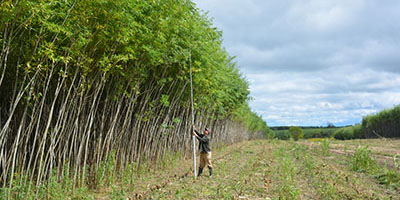
Climate & Energy
Work with faculty from multiple disciplines and perspectives to tackle a wide range
of research questions related to climate change and energy.
Ecosystems: Land, Water and Air
Integrate multidisciplinary approaches by working with faculty experts to contribute better understanding and novel solutions relevant to society-environment-ecosystem interactions.
Learn More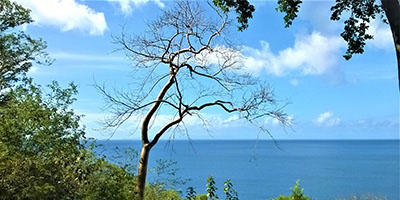
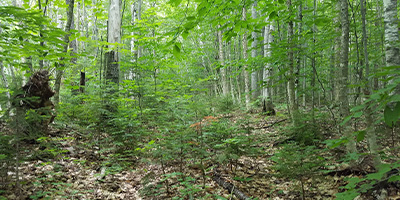
Indigenous Peoples & Environmental Science
Collaboratively and creatively engage both Indigenous knowledge systems and Western
academic science in environmental research
Policy, Planning, Communication & Society
Focuses on people's relationships and interactions with natural and built environments, and how we value, communicate, plan, design, manage, and make decisions about such spaces.
Learn More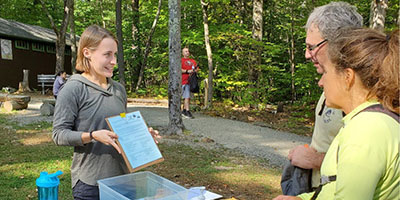
Research Areas are designed to group faculty around broad research and teaching themes. Prospective students identify potential Major Professors within one of these Research Areas when applying to the program.
GPES offers Doctor of Philosophy (PhD), Master of Science (MS), and Master of Professional Studies (MPS) degree programs. The program is designed to have minimal required coursework so students can uniquely design a graduate curriculum that satisfies their research and professional needs.
We encourage you to learn more about our programs, contact potential Major Professors, and join us to work towards making our world a more just, healthy and sustainable environmental system.
Recent Graduate Student Stories
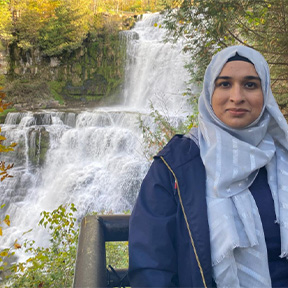 Amina Furrkukh Mughal
Amina is a Ph.D. Candidate in Dr. Yaqi You's lab. See below for their student story.
My path to environmental science was through microbiology and immunology before I found my way to freshwater systems. With a BS in Biosciences and an MS in Microbiology and Immunology, I came to SUNY ESF with a strong foundation in molecular biology, but it was here that I discovered how those tools could answer some of the biggest questions about lake ecosystem health.
My research centers on the hidden microbial world of freshwater lake systems, which examines the sediment microbial communities and fish gut microbiomes that quietly shape how these ecosystems function. Using sequencing technologies and bioinformatic analysis, I work to understand how microbial communities respond to environmental stressors and contaminants, from PCBs to the broader landscape of emerging pollutants.
I've had the opportunity to build leadership experience as president of an international student association and to present my research at multiple regional and international conferences. These experiences have shaped how I think about connecting science with community.
For me, GPES has been the space where microbiology, environmental chemistry, and a
genuine curiosity about lake ecosystems all come together.
Here is the link to my google scholar to learn about latest research from our group and LinkedIn to get connected.
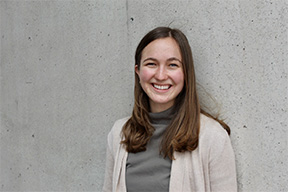 Andrea Cass
Andrea Cass is a GPES PhD Candidate in the policy, planning, communication, and society track focusing on climate adaptation, relocation from flooding, and long-term disaster recovery in West Virginia. During her 5 months in southern West Virginia, she has conducted over 59 interviews as part of her dissertation as well as supported the development of the West Virginia Flood Resiliency Framework with her PhD advisor, Dr. Jame Shinn. Her dissertation examines the power dynamics of relocation from flooding and examines voluntary buyouts in inland, riverine communities. Alongside her colleague, she recently published a commentary in the Climate and Development Journal on everyday resistance to climate adaptation. Andrea has received three awards from the American Association of Geographers and received funding from the Syracuse University Program for the Advancement of Research on Conflict & Collaboration, R.G. Pack Fellowship, SUNY ESF Alumni Association, and SUNY ESF Graduate Student Association.
Cass, A., & Tasnim, T. (2026). Transformational adaptation from the bottom-up: arts, alternative imaginaries, and everyday forms of resistance. Climate and Development, 18(3), 273–279. Full Article
 Jean Michel Lacour
Jean Michel Lacour is a Ph.D. candidate in Environmental Science at SUNY ESF, specializing in Climate and Energy Systems. Building on an M.S. in Environmental Engineering from Syracuse University, his research integrates engineering, life cycle assessment (LCA), forest-carbon modeling, and energy-system analysis to evaluate the full carbon implications of emerging climate solutions. His recently published research, conducted as part of a collaborative effort between SUNY ESF and Cornell University, examines slash walls, an innovative forest-management practice designed to improve forest regeneration by limiting deer browsing, and integrates the emissions associated with their construction and maintenance with long-term additional carbon sequestration to evaluate their net climate performance. His current research addresses another critical climate trade-off: the conversion of forestland to utility-scale solar photovoltaic development in New York State. By integrating forest carbon loss, foregone sequestration, PV life-cycle emissions, electricity generation, and regional grid conditions, the study evaluates carbon debt and payback across New York's electricity-grid regions. Rather than asking simply whether solar energy is low-carbon, the research examines when and under what land, energy, and grid conditions forest-to-solar development produces a net climate benefit. Across both studies, Jean Michel's work uses engineering and life-cycle thinking to generate science-based evidence that can inform climate-smart forest management, renewable-energy siting, and New York's broader decarbonization goals.
Lacour, J. M., Therasme, O., Chedzoy, B. J., Weinstein, D. A., Smallidge, P., & Volk, T. (2026). Greenhouse gas emissions and removals of slash walls: A bio-based deer exclusion solution for climate-smart forest regeneration. Cleaner Environmental Systems, 22, 100454. https://doi.org/10.1016/j.cesys.2026.100454
 Kaitlyn Cunningham
Kaitlyn Cunningham is a graduate student in the Master's Program in Environmental Science, working alongside Dr. Christine Georgakakos to understand how the land use relates to the types of emerging contaminants detected. An important area of focus pertains to pharmaceutical and personal care products (PPCPs). While these are typically organic pollutants appearing in low concentrations in aquatic systems as a result of human activity, their presence garners growing concern due to their ecotoxicological effects. For instance, some antibacterial residues from soaps are known to increase the occurrence of antibiotic resistance genes. From natural waters, these compounds can enter municipal drinking water or bioaccumulate in food webs. Kaitlyn's academic studies and field work continue to investigate the complex relationship between emerging contaminants and land use, revealing insights pivotal for seeking solutions to the challenges posed by our continuously evolving world.
Graduate Student Story Archive